

Ozen Reserve

Kaiseki counter · Ginza, Tokyo

Ozen

The lacquered tray

o·zen · /o-zɛn/ · “the honoured tray”

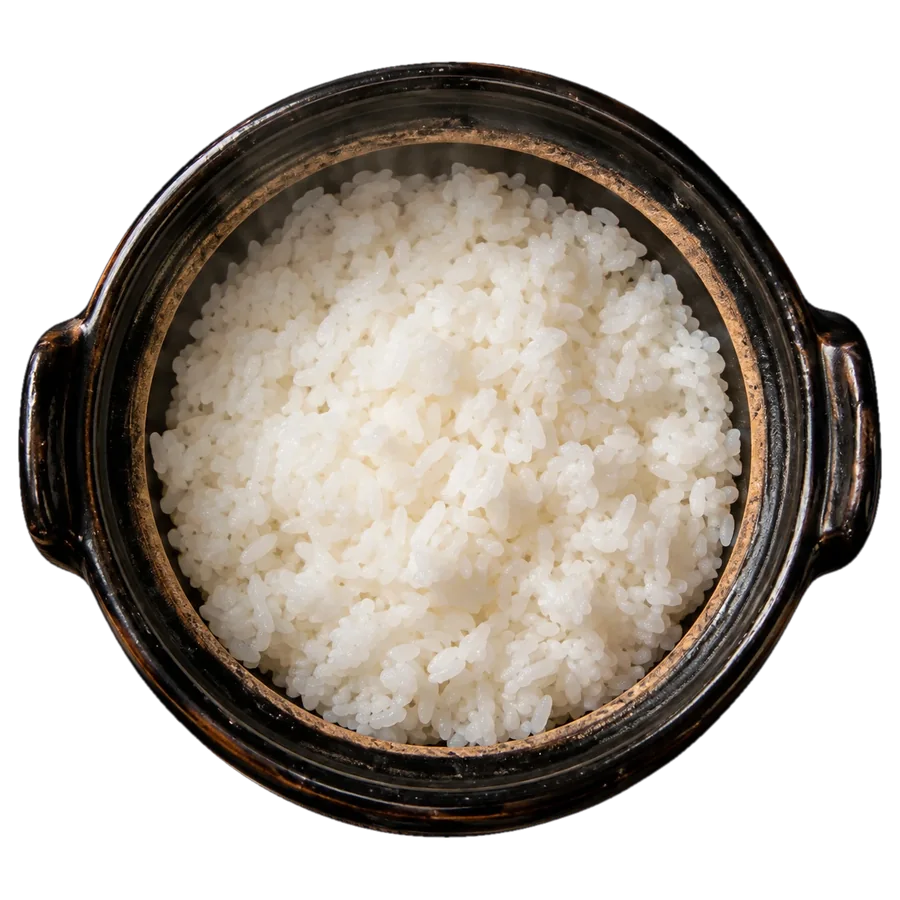
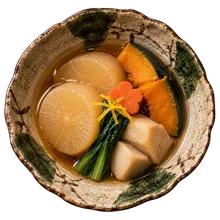
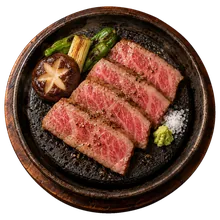
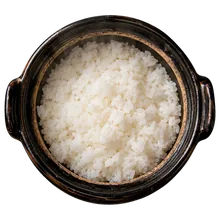
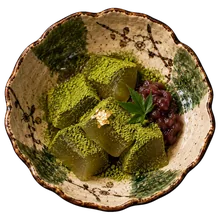
Japanese has one word for rice and for a meal: gohan. Every evening at our counter, one soup and three sides are set around it, and the season adds the rest. Nine small courses on a single lacquered tray, for twelve guests, from one chef.

Reserve a seat

Tonight’s seven moments

Scroll

一汁三菜 Ichijū sansai

Seven moments, one tray

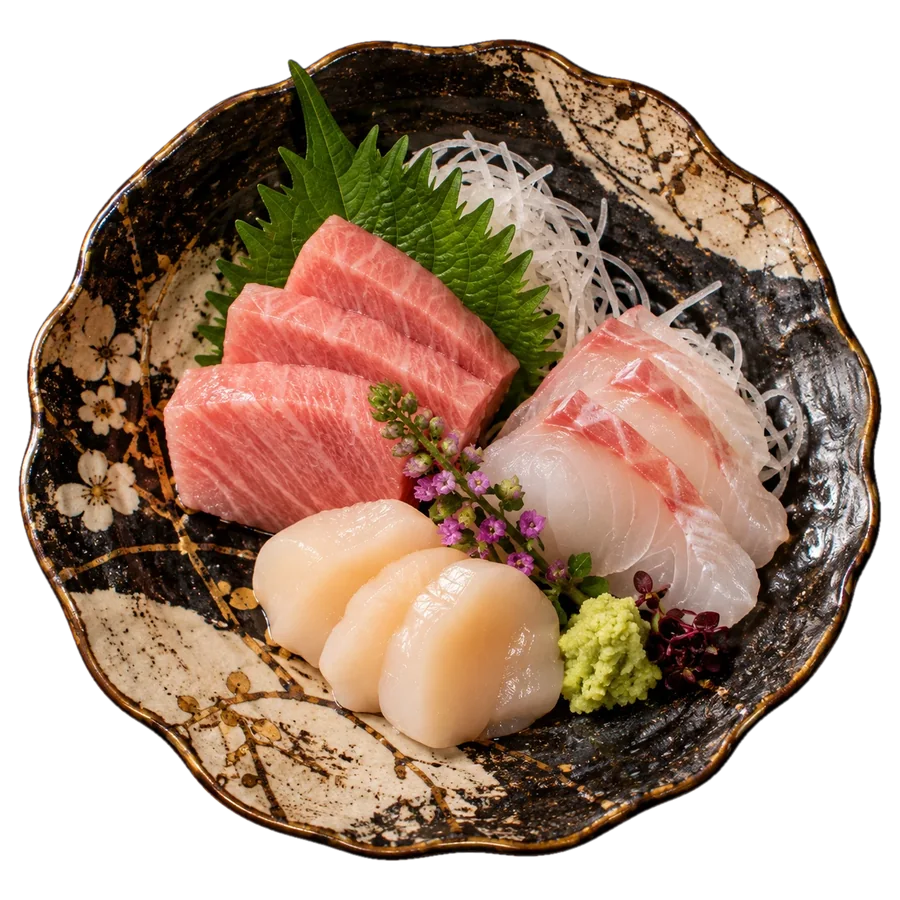
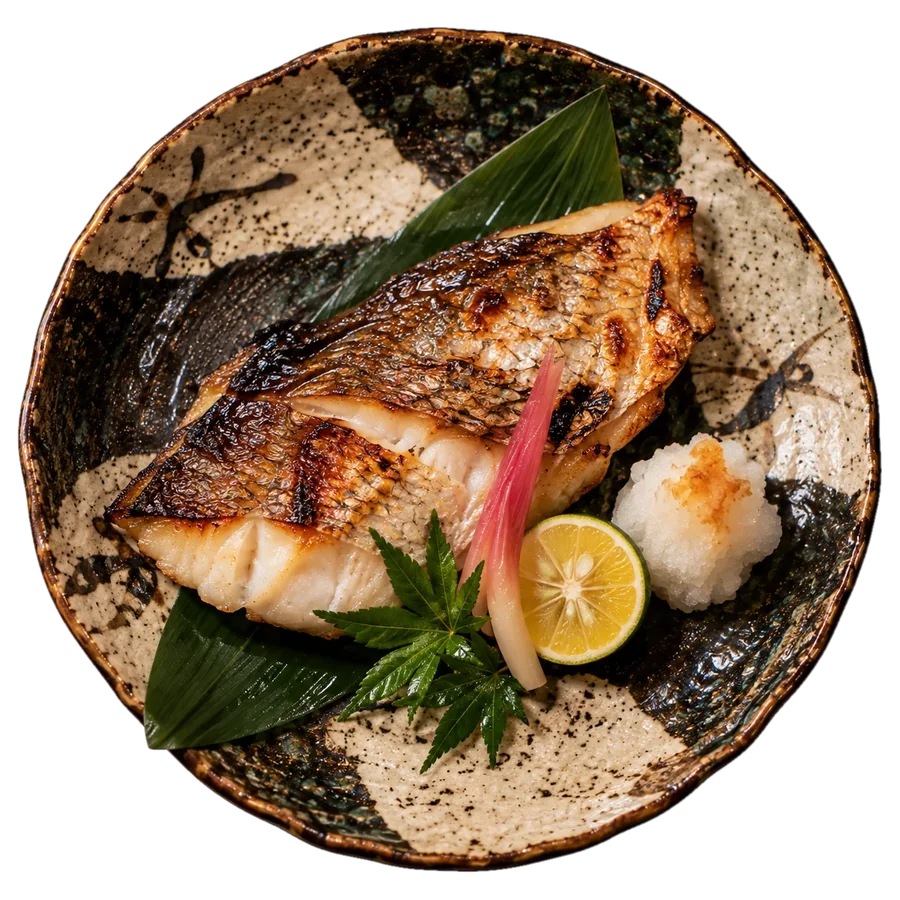
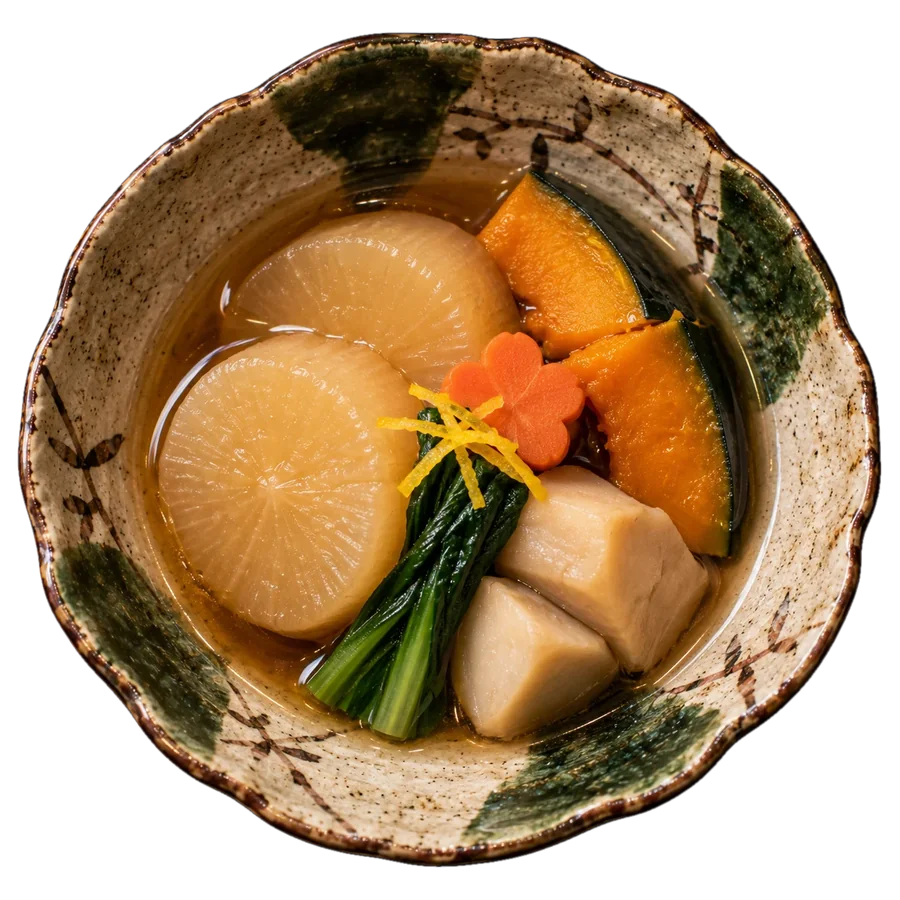
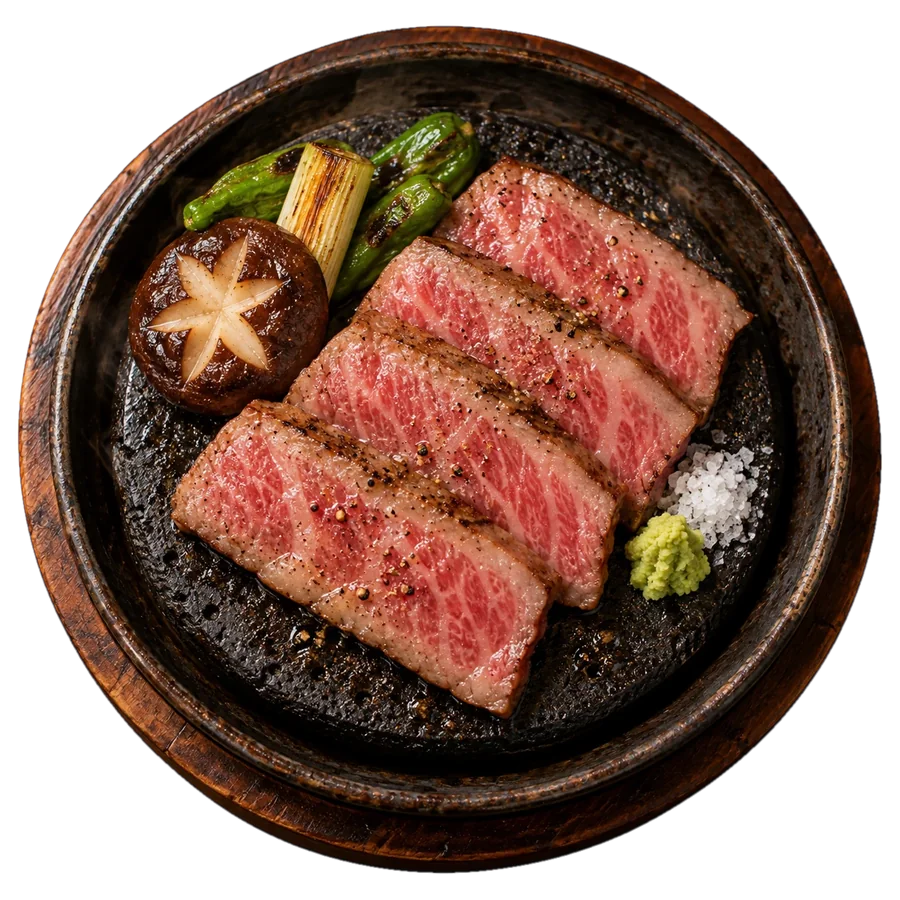
A kaiseki dinner is not a list of dishes. It is one evening told in small courses: something raw, something simmered, something grilled over charcoal, and rice at the end. Turn the tray. Every dish sits where the chef would set it.

Choose a dish, drag the tray, or use the arrow keys

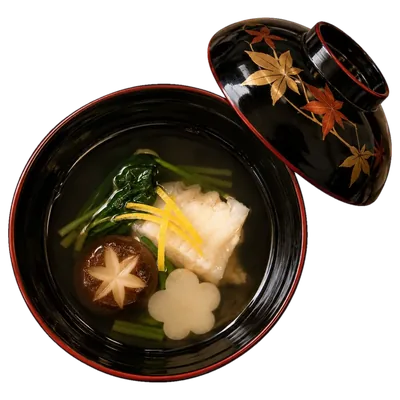
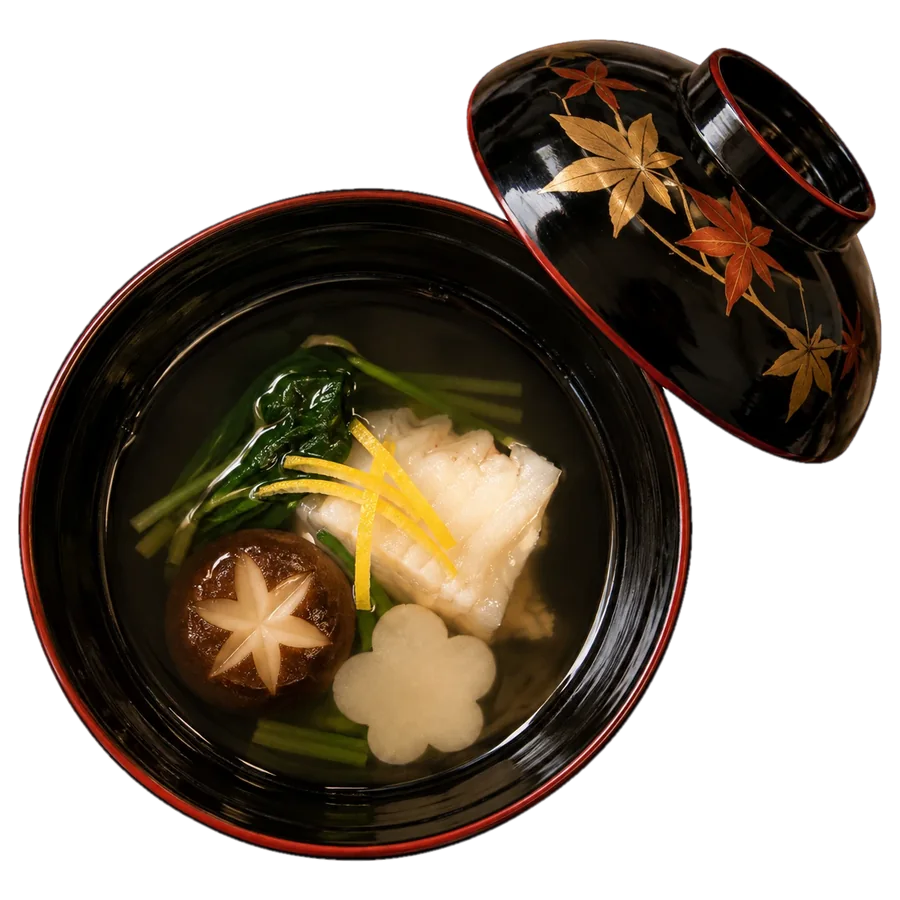
Clear dashi soup in a black lacquer bowl with sea bream, a shiitake cut into a star, a plum-blossom turnip and yuzu peel; the maple-leaf lid rests beside it

Moment 1 of 7 · The opening note

Owan 椀

Clear dashi soup

The lid comes off and the counter smells of kombu and yuzu. A kaiseki cook is judged first by this bowl: clear enough to read through, deep enough to remember.

Season
Autumn sea bream, kabu turnip
Tastes like
Sea air, smoke, a sliver of citrus
Served with
Nothing. Lift the bowl and drink
From
Rishiri kombu, Makurazaki bonito
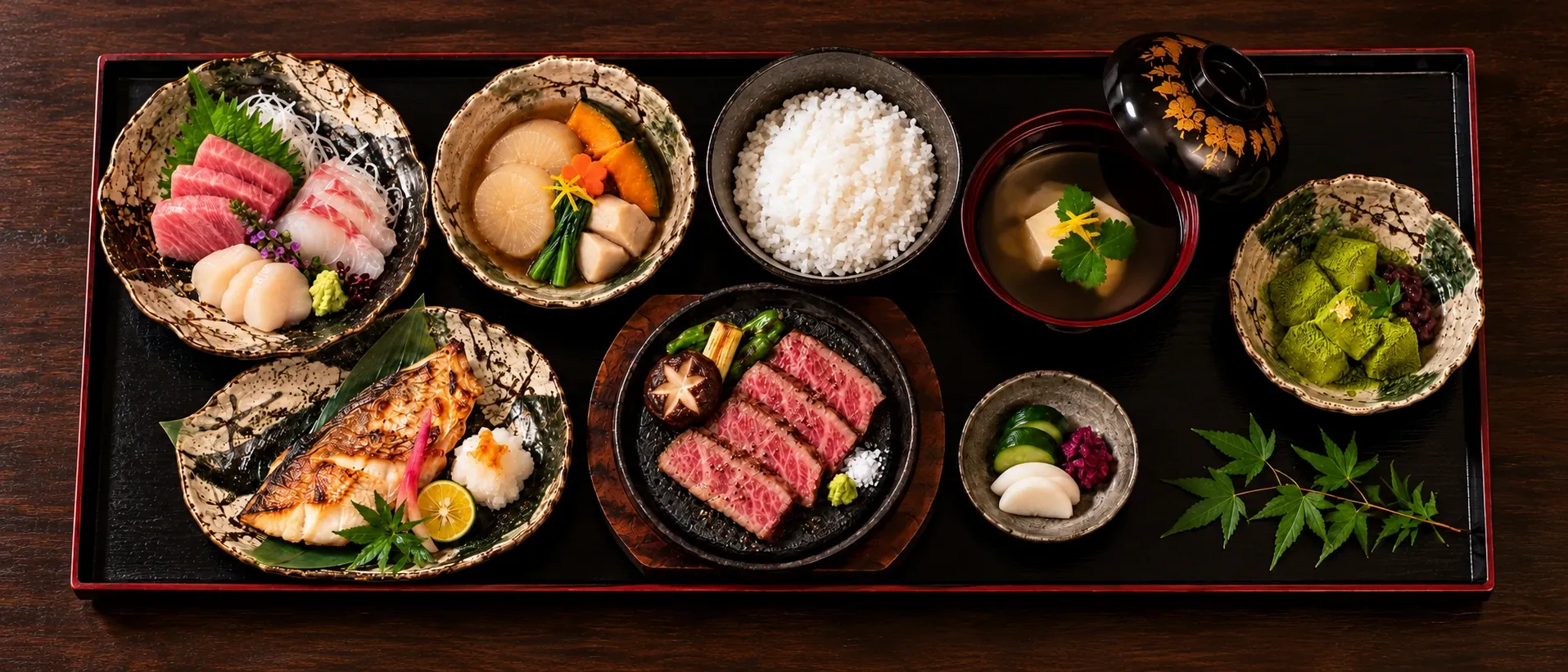
Overhead view of a red-rimmed black lacquer tray holding a full kaiseki dinner: sashimi, simmered vegetables, rice, clear soup, grilled fish, wagyū, pickles and matcha sweets
The autumn tray, laid for one guest

Twelve seats.One counter.

No tables and no menu to choose from. Twelve guests sit along one counter of three-hundred-year-old hinoki and watch the evening being made, course by course, within reach of the chef. Dinner begins at the same moment for everyone, and so does the silence after the first sip.

  • 12seats
  • 9courses
  • 2sittings a night
  • 1chef
  • 3hours, unhurried

旬 Shun

The moment it is best

Shun: the few days in a year when an ingredient is at its peak

The old Japanese calendar counted seventy-two seasons, each about five days long: the week the first geese return, the week the chrysanthemums open, the week the crickets reach the door. A kaiseki menu is written to that calendar. It changes not four times a year but every few days, and nothing is served outside its moment.

The word kaiseki means “stone in the robe”. Monks in long meditation held a warm stone against the stomach to quiet their hunger. The first kaiseki meals, served before the tea ceremony, kept that spirit: just enough, and nothing wasted.

Our menu is not written. It is noticed: at the market at five, in the garden at noon, in the weather at six.
  1. 1580s · Kyōto

    Sen no Rikyū

    The tea master serves a small meal before the tea: one soup, three sides, nothing wasted. Tea kaiseki is born.

  2. 1700s · Edo

    The ryōtei

    Kaiseki leaves the tea room for the great restaurants of Edo and Kyōto and becomes an evening of its own.

  3. 1950s · Osaka

    The counter

    Kappō cooking moves the chef in front of the guest. Cooking becomes something you watch.

  4. Tonight · Ginza

    Ozen

    Twelve seats, one chef, a tray of black lacquer. The season decides the rest.

Gold engraving on black of Mount Fuji at sunrise over a lake, with a torii gate, pines and cherry blossoms inside a wave-pattern border
季節を味わうTo taste the season, not the year.

空間 The rooms

Lit like a lantern

Black plaster, hinoki, washi and one pool of light for every seat. The rooms are designed to disappear, so the food never has to compete.

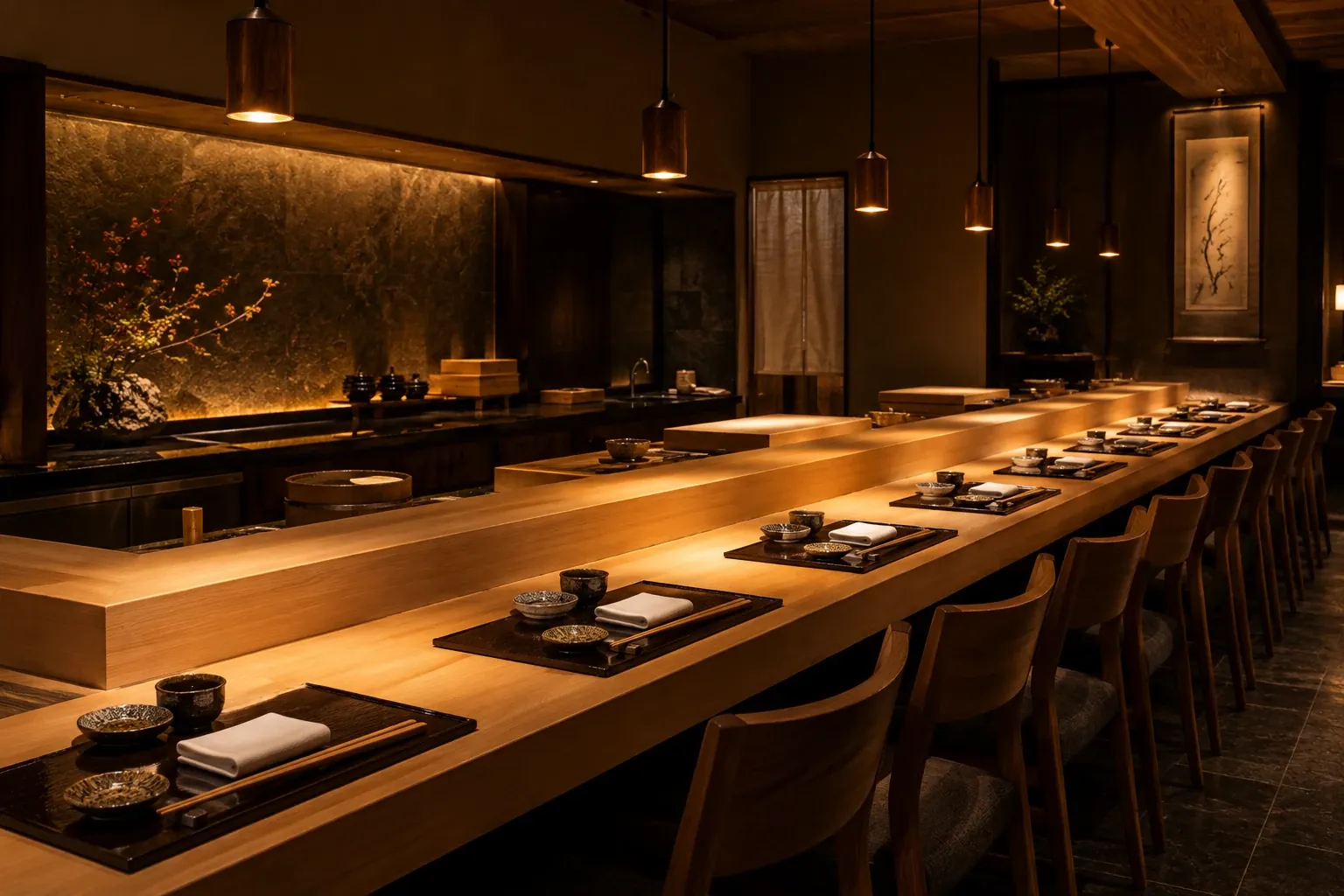
A long pale hinoki counter set for twelve under pendant lamps, with a gold-leaf wall and an ikebana arrangement

The counter

Twelve seats of hinoki under twelve pools of light.

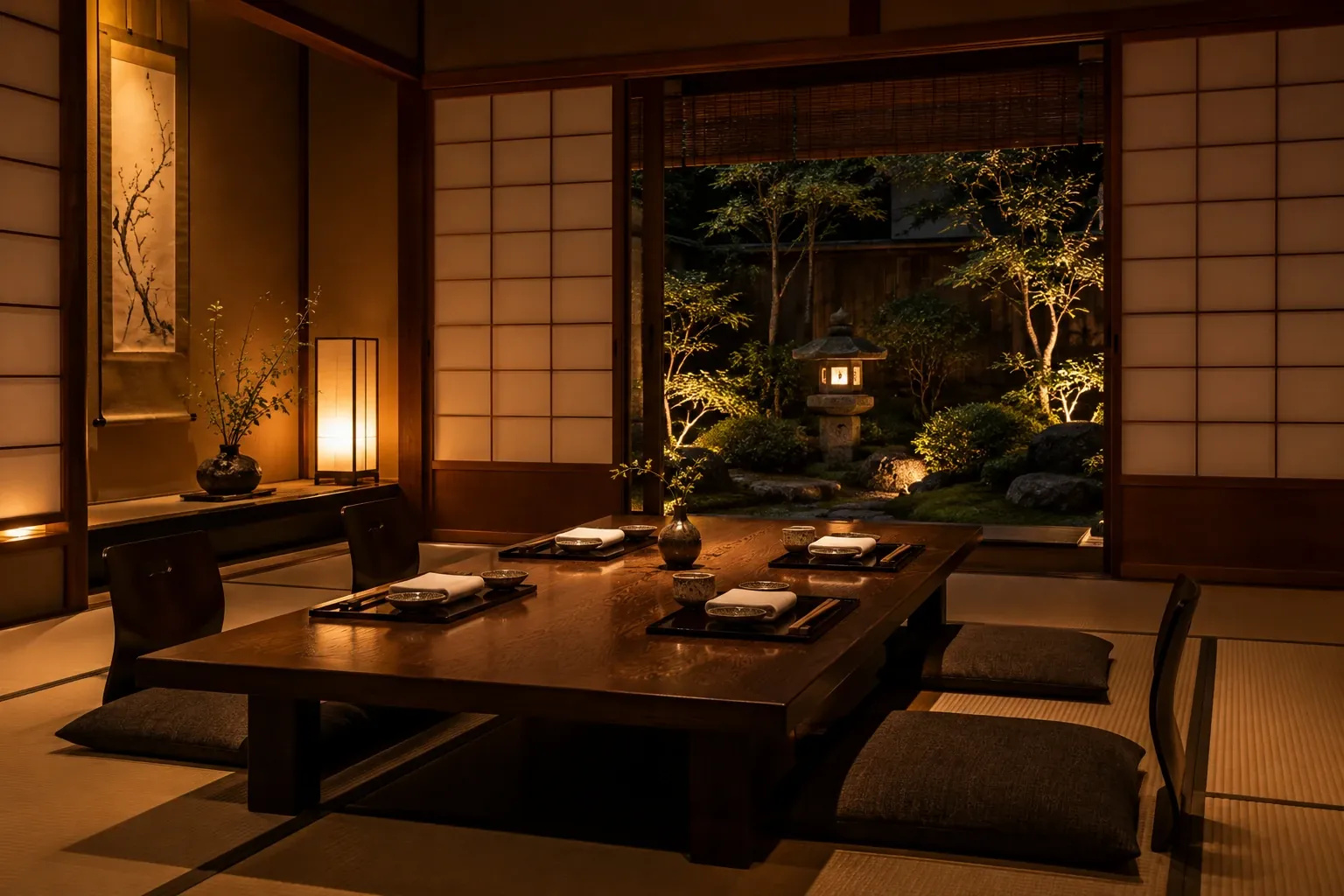
A private tatami room with a low table set for four, shoji screens, a paper lantern and an open view of a moss garden with a stone lantern

The tatami room

A private room for four to eight, opening onto a moss garden and a stone lantern.

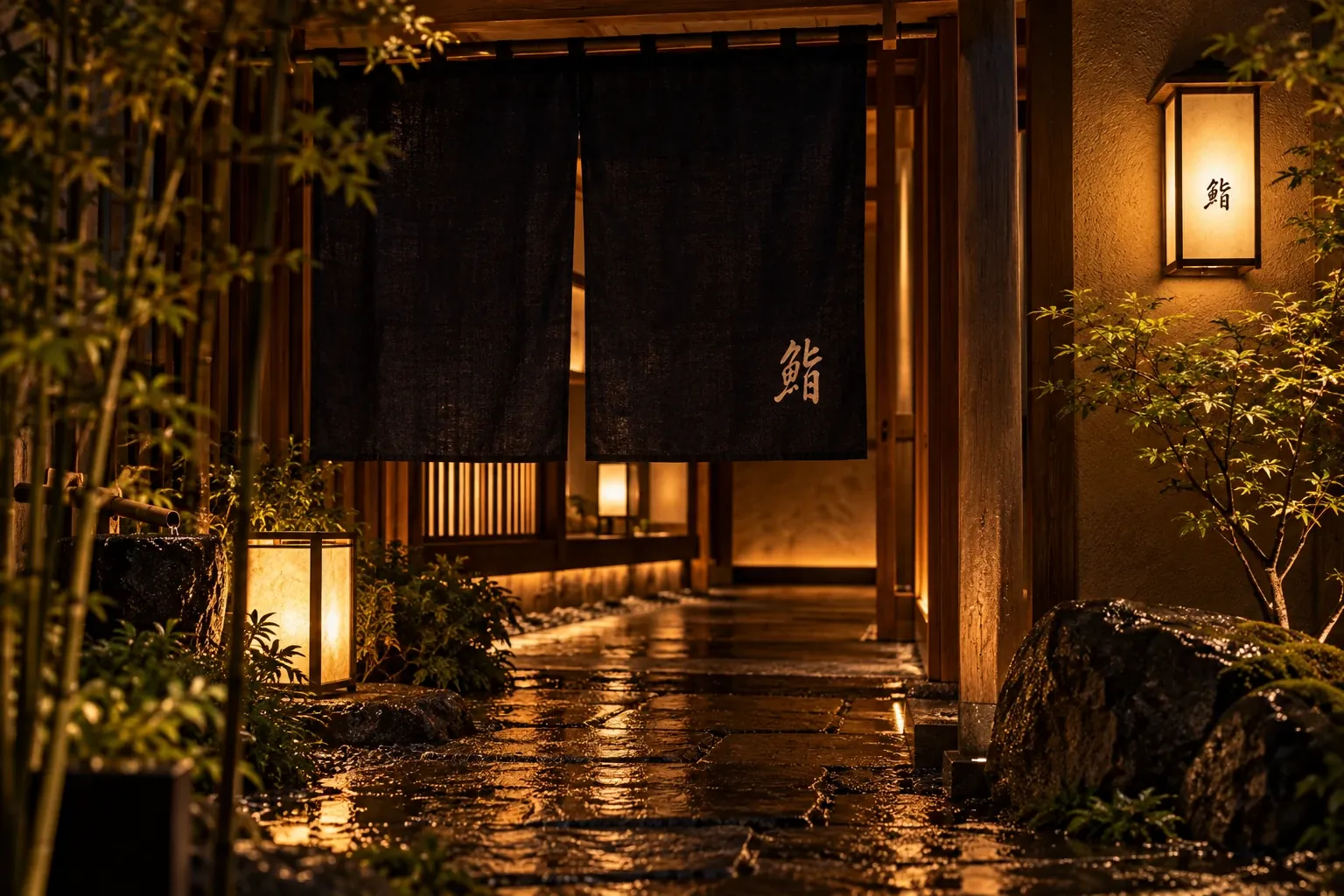
A dark noren curtain over the entrance, a wet stone path lit by paper lanterns, bamboo and maple

The entrance

Through the noren and along wet stones. The evening begins before the door.

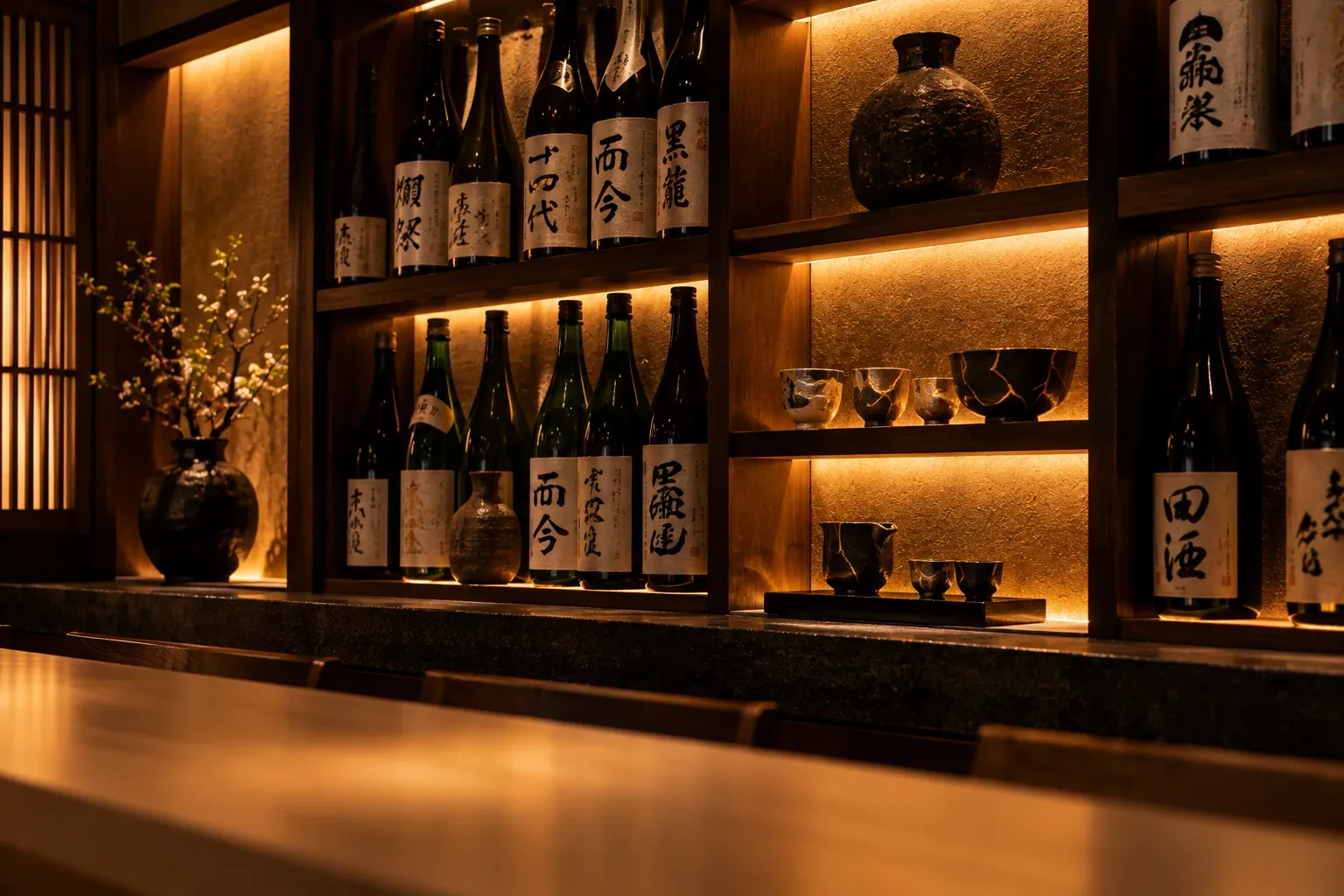
Backlit shelves of sake bottles and gold-repaired kintsugi cups behind the counter

The sake wall

Forty bottles from twenty prefectures, poured into cups mended with gold.

料理長 The chef

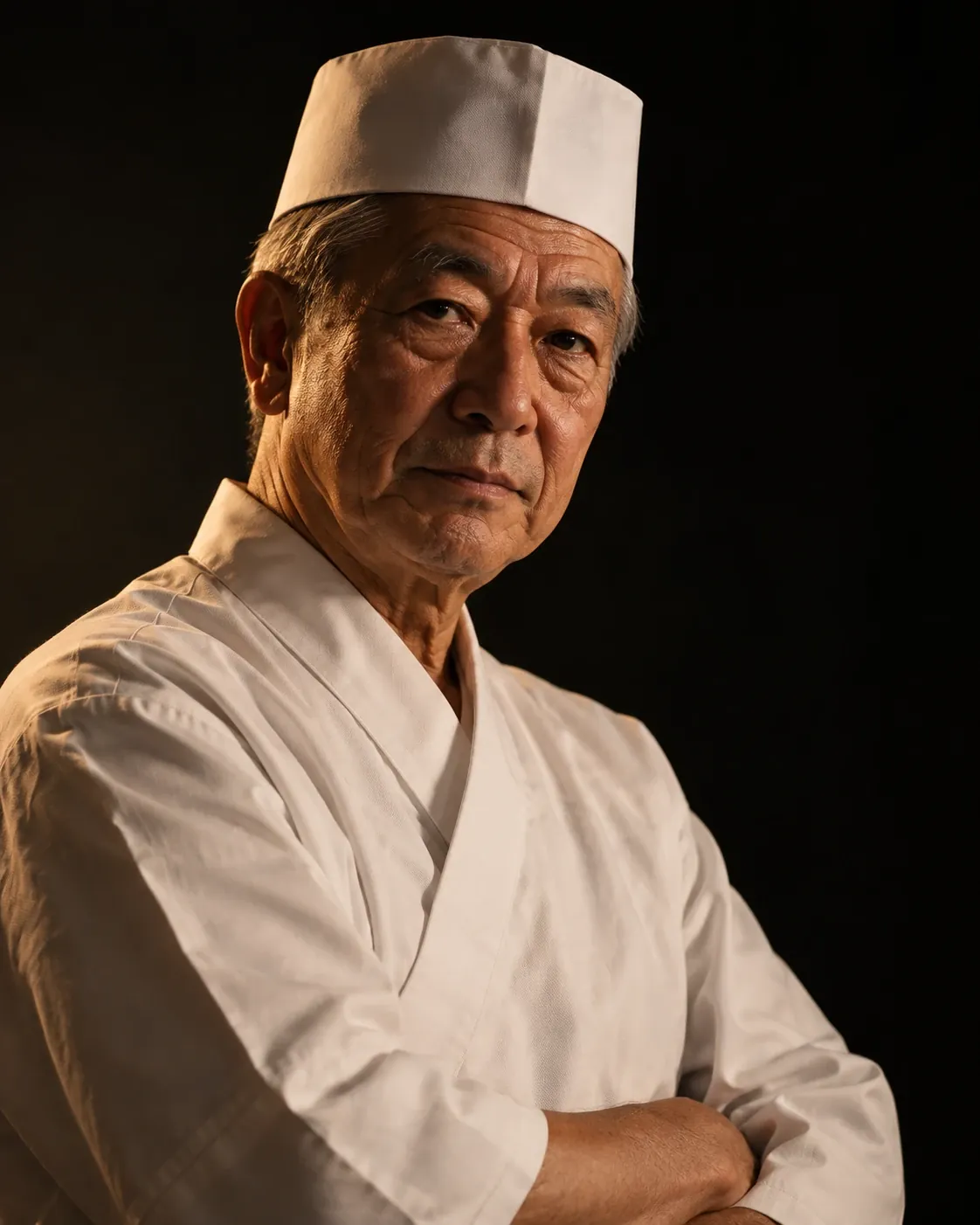
Shōzō Amano

Forty-one years at the counter: Kyōto, Kanazawa, Ginza

He began washing rice at fifteen in a Kyōto ryōtei and was not allowed to touch a fish for three years. He still washes the rice himself, every evening, at four.

Amano opened Ozen with one rule: nothing goes on the tray unless he can tell you its story. The boat, the farm, the potter who threw the bowl. He cooks in front of you because, as he puts it, a dish carried out of a kitchen has already lost its first minute.

Portrait of chef Shōzō Amano in a white cap and jacket, arms folded, against a dark background
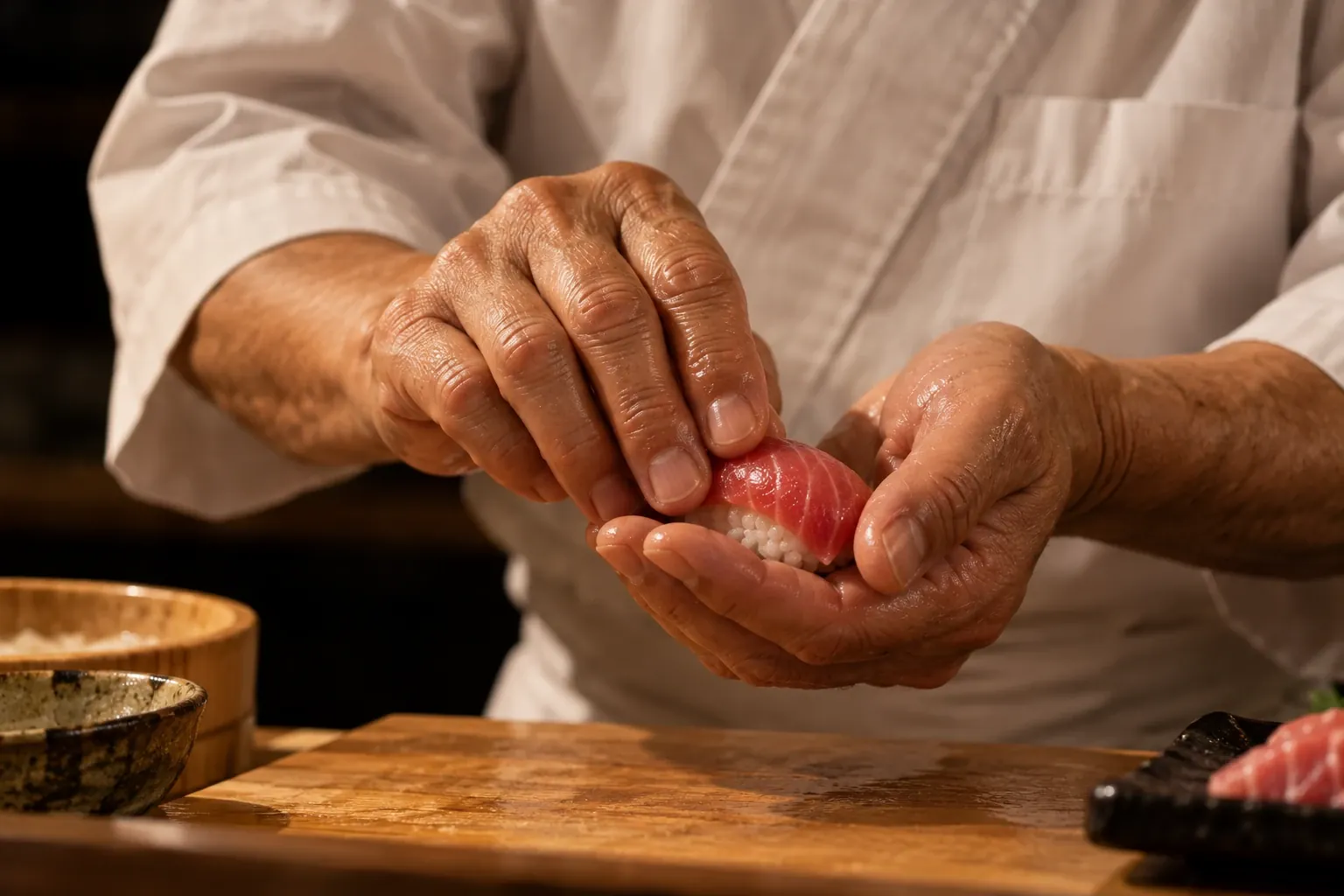
The chef's hands pressing a piece of tuna nigiri over a wooden board

“A dish carried out of a kitchen has already lost its first minute.”

Shōzō Amano

The first thing he teaches

Ichiban dashi 一番出汁

First dashi, the stock every course on the tray begins with

Every apprentice at Ozen spends their first month on this pot. It has two ingredients and no shortcuts, and if you learn one thing to cook from this page, learn this.

Ingredients

Scale the pot 4 servings
  • 1000 mlsoft water
  • 20 gkombu, Rishiri if you can find it
  • 30 gkatsuobushi, thick-shaved
  • 1 tsplight soy (usukuchi), for the soup
  • ½ tspfine sea salt
  • 4strips of yuzu peel, one per bowl
Soak
1 hr
Heat
25 min
Keeps
2 days, chilled
Region
Kyōto

Method

  1. Wipe, don’t wash. Wipe the kombu lightly with a damp cloth. The white bloom on its surface is flavour, not dust.
  2. Soak. Put the kombu in the cold water for at least an hour, or overnight in the fridge.
  3. Heat slowly. Warm the pot over the lowest flame until it reaches 60 °C, and hold it there for twenty minutes. Never let it boil: boiled kombu turns slimy and bitter.
  4. Lift the kombu just before the first bubbles, at about 85 °C, then turn off the heat.
  5. Add the katsuobushi all at once. Don’t stir. Let the flakes sink on their own, about a minute.
  6. Strain without pressing. Line a sieve with cloth and let it drip through. Squeezing clouds the dashi and makes it taste fishy.
  7. Season for soup. Salt first, then a few drops of soy, just enough to colour it like weak tea. Float a strip of yuzu peel in each bowl.

作法 Sahō

Six courtesies of the counter

Twelve seats make one shared room, and shared rooms have manners. None of these are rules here, but all of them will be noticed, kindly.

  • Itadakimasu

    “I humbly receive.”

    Said before the first bite, hands together. One word that thanks the fisherman, the farmer, the potter and the cook.

  • Hashi o tatenai

    “Never stand your chopsticks.”

    Chopsticks upright in rice belong on a funeral altar. When you pause, lay them on the rest with the tips to the left.

  • Hitokuchi de

    “In one bite.”

    Nigiri is shaped to the size of a mouth. Dip the fish, never the rice, and eat it whole while it is still at body temperature.

  • Kaori o mamoru

    “Leave the perfume at home.”

    The counter smells of hinoki, yuzu and charcoal. Strong perfume reaches your neighbour’s soup before they do.

  • Omakase

    “I leave it to you.”

    There is nothing to order. Tell us what you can’t eat when you book; for everything else, trust the season.

  • Gochisōsama

    “It was a feast.”

    Said as you leave. It literally thanks someone for running about to feed you, which tonight he did.

いらっしゃいませ The greeting

Irasshaimase

“Please, come in.”

It is the first word you hear at any Japanese counter, called out by everyone at once: the chef, the apprentices, sometimes the regulars. It means welcome. It also means you were expected.

Your seat is set. Tell us when.

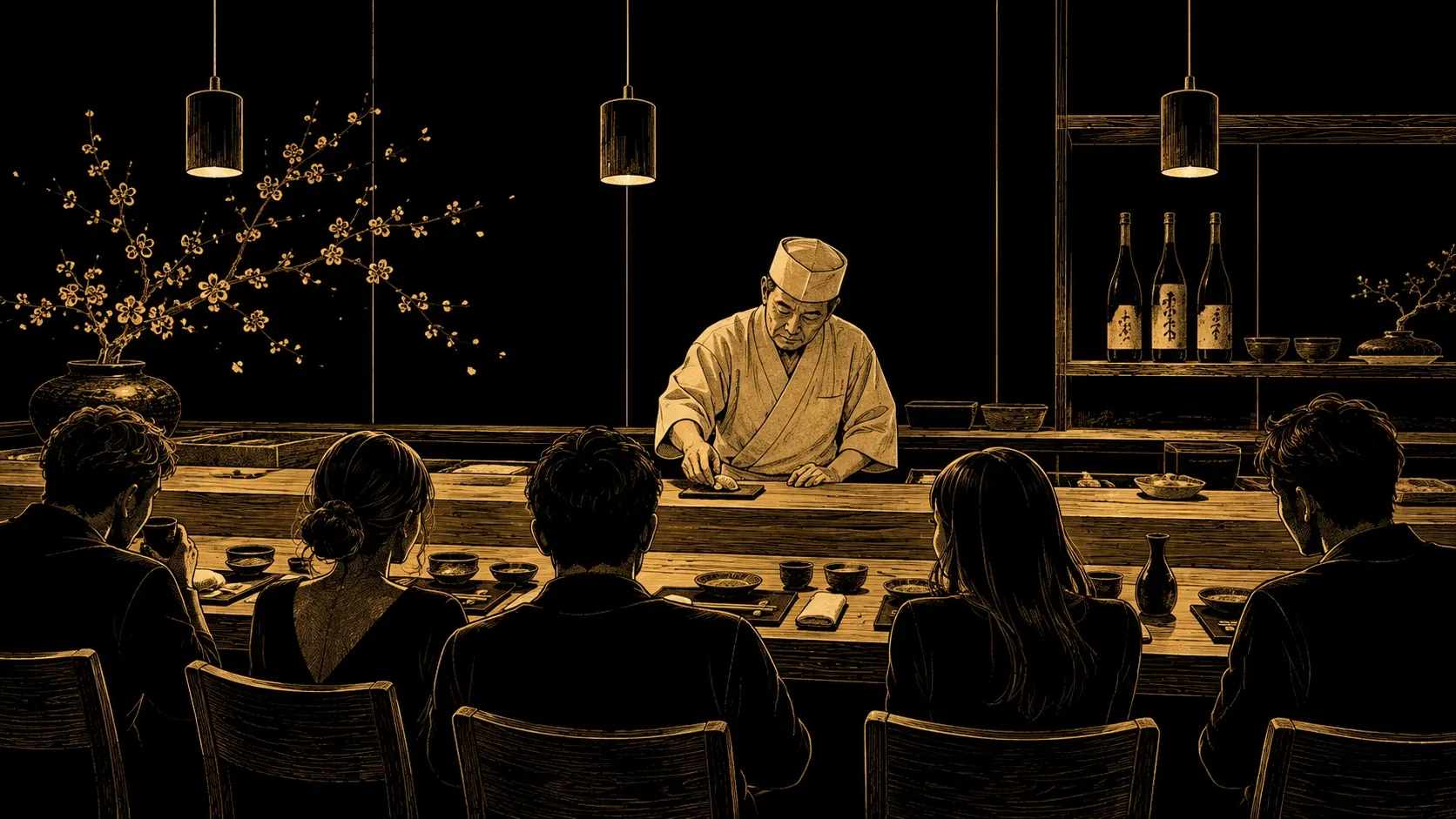
Gold engraving of the chef pressing nigiri at the counter while five guests watch, under pendant lamps and plum blossoms

Reserve a seat

Two sittings, Tuesday to Saturday, at 17:30 and 20:30. We confirm every booking personally by email within a day.

When

Sitting

Who
Guests
2
Seating

Your details